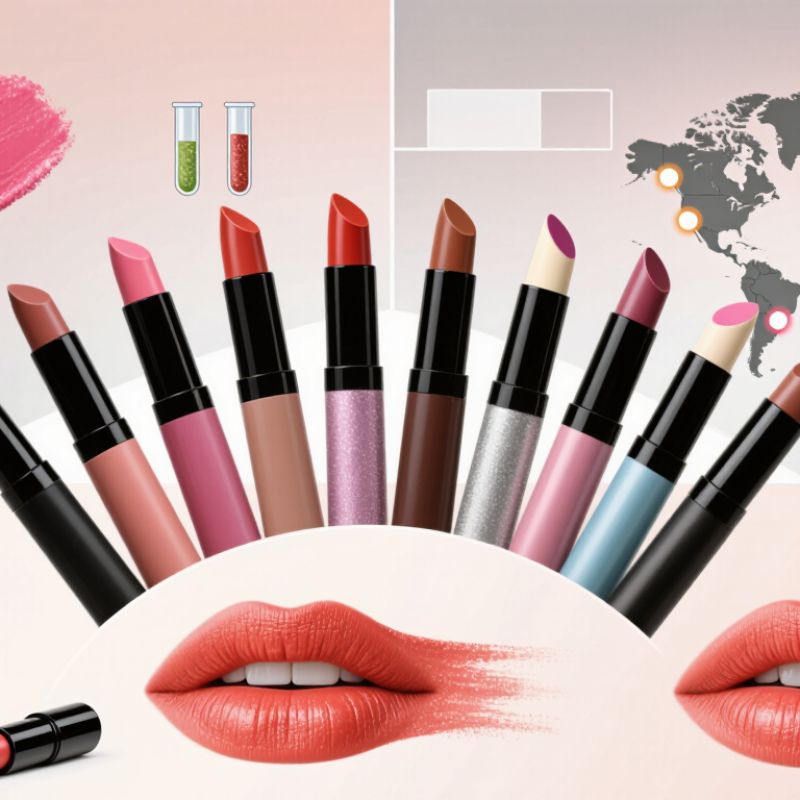
The global beauty market is expanding, but buyers face more complexity than a simple sales forecast suggests. McKinsey’s The Beauty Market in 2023 projects the industry could approach $580 billion by 2027, with roughly 6% annual growth. Lip And Cheek Stick products fit this momentum because they combine color, portability, and faster application. They also expose weaknesses quickly. A dry texture, weak pigment, or melting tube can damage customer trust within days.
This guide presents ten practical buying tips for global buyers. It considers formula performance, shade consistency, packaging strength, supplier capability, documentation, and total landed cost. Euromonitor International’s beauty research continues to highlight premiumization, online discovery, and multifunctional products as important market forces. However, “multifunctional” should not become an empty label. Buyers should request full ingredient lists, product specifications, stability information, microbiological testing, and manufacturing quality records. Check the details.
In sourcing evaluations, test the stick on warm skin, dry skin, and under direct light. Observe drag, payoff, blending, transfer, scent, and residue after several hours. A product may look attractive in a factory sample but perform differently after transport or storage. Circana’s global beauty tracking also shows that consumer demand varies sharply by market, channel, and price tier. That makes one universal purchasing formula unreliable. A better approach compares local preferences with measurable supplier evidence. Review packaging compatibility, batch traceability, labeling readiness, and country-specific cosmetic requirements before placing a large order. Some decisions remain imperfect, especially when forecasts are incomplete. That is why disciplined sampling and documented communication matter more than persuasive sales language. Test before scaling.
Defining your needs is the real starting point when buying lip and cheek sticks globally. Decide whether the product targets daily makeup, professional artists, travel users, or sensitive skin. Each audience changes the formula, shade range, packaging, and price expectations. A creamy stick may blend beautifully, yet melt during transport in warm climates. A firmer texture may survive shipping better, but feel less comfortable on dry cheeks.
Write your buyer priorities before contacting suppliers. Include finish, coverage, scent preference, net weight, packaging material, minimum order quantity, and target cost. Ask for ingredient lists, stability data, batch information, and safety documents suitable for your market. Check whether claims such as “long-wearing” or “sensitive-skin friendly” have supporting evidence. Local cosmetic rules still matter. Do not assume one document works everywhere.
Test samples under realistic conditions. Wear the stick for several hours, apply it over foundation, and leave one in a warm room. Check twisting, cap security, color consistency, and residue around the rim. Small details reveal production weaknesses. Keep written records and compare samples using the same lighting. I have found that attractive swatches can distract from poor packaging decisions. This is an easy mistake. Reconsider priorities when a lower price creates higher inspection, return, or storage costs. A reliable supplier should answer clearly, disclose limitations, and provide consistent samples before larger commitments.
Global buyers should inspect every lip and cheek stick beyond its shade, finish, and packaging. Ingredient order reveals concentration, although it does not prove suitability. Look for fragrance, essential oils, and colorants that may irritate sensitive skin. Lips are especially vulnerable because users often lick the product.
The Cosmetic Ingredient Review’s 2023 program reported safety assessments covering more than 7,000 cosmetic ingredients. Such reviews support ingredient research, but they cannot replace product-specific testing. Ask suppliers for complete ingredient lists, allergen declarations, microbial results, and stability data. A clean-looking formula can still fail after heat exposure or repeated finger contact.
Skin compatibility requires practical evidence. Request patch-test instructions for sensitive, dry, oily, and acne-prone skin. Check whether the formula contains known personal triggers, including certain preservatives or fragrance materials. ISO 22716 provides recognized guidance for cosmetic manufacturing and quality practices. In the European Union, Regulation 1223/2009 requires a documented safety assessment before sale. U.S. requirements also place safety responsibility on manufacturers, with color additives needing specific authorization. Verify batch codes, responsible-party details, and testing records before importing. I would not rely on a certificate alone; documents can be incomplete, outdated, or misunderstood across markets. Temperature and humidity testing are easy to overlook. That mistake can change texture, odor, and microbial risk during shipping.
Global buyers should test texture before judging appearance. Swipe the stick on clean skin and note its glide, drag, and melting speed. A creamy formula feels comfortable, but it may move in humid weather. A firmer texture travels better, though it can tug on dry skin. Check whether one layer gives a sheer tint or builds evenly. Patchy pigment creates avoidable complaints.
Compare the color range under daylight, not only on a digital chart. Look for warm, cool, and neutral undertones across light, medium, and deep skin tones. A red shade may turn orange on one complexion and berry-toned on another. Request real swatches when possible.
My own mistake was trusting a product image too quickly. The shade looked balanced online but appeared dull indoors.
Test both lip and cheek use, because skin oils can change the color.
Finish also affects buying decisions. Cream, satin, matte, and soft-glow surfaces serve different preferences. Check whether the finish stays smooth or emphasizes cheek texture. Then test wear after drinking water, light exercise, and several hours of normal movement. Measure fading, transfer, creasing, and dryness separately.
Humid climates need stronger wear testing. Dry climates need comfort testing. Packaging matters too: a secure cap protects the formula during transport. Some products perform well in samples but break after repeated twisting. Ask for stability data, yet inspect physical samples before placing a large order.
Lip and cheek sticks need more than attractive colors and smooth application. Global buyers should inspect the container, cap, twist mechanism, and seal. Check for leakage after heat and cold exposure. A loose cap can damage products during long-distance shipping. Request packaging specifications, material details, and migration or compatibility test results. The formula should not react with its tube or outer carton. That detail is easy to miss.
Tips: Ask for production samples, not only photographs. Confirm batch numbers, net weight, ingredient names, country of origin, and importer details. Labels may require different languages, warnings, usage instructions, and responsible-person information in each market. Do not assume one label works everywhere. Review every claim, including “long-lasting” or “natural,” against reliable test records. Certifications should come from recognized bodies and match the exact product and facility. A certificate for another item proves little.
Shelf life deserves careful checking. Request stability data, manufacturing dates, expiry dates, and the period-after-opening symbol when applicable. Store a sample under normal conditions and observe odor, color, texture, and twisting performance. A glossy package can still conceal weak testing. I would rather delay approval than trust an incomplete document set. Still, even careful checks can miss regional updates, so buyers should review requirements with qualified local compliance specialists before importation.
10 Lip And Cheek Stick Buying Tips for Global Buyers
Supplier evaluation should begin with evidence, not attractive photos. Request product samples, ingredient lists, batch records, and recent quality certificates. Check whether the supplier can maintain color, texture, and filling accuracy across repeated orders. A video factory tour helps, but an independent audit offers stronger reassurance. Ask about testing for stability, microbial safety, packaging compatibility, and heavy metals where applicable. Communication matters too. Slow answers may signal future production problems.
Compare the full landed cost, not only the unit price. Include sampling fees, tooling, packaging, inspection, insurance, duties, and local delivery. A low quotation may hide expensive custom packaging requirements. Review minimum order quantities carefully. Large MOQs can reduce unit prices but tie up cash and create aging inventory. Request tiered pricing at several volumes. Test demand before committing. I have seen buyers choose the cheapest offer, then pay more for delays and rework. That decision deserves a second look.
Shipping terms must be written clearly in the purchase contract. Confirm whether the price is EXW, FOB, CIF, or another Incoterm, and identify who handles export clearance, freight, insurance, and import procedures. Ask for carton dimensions, gross weight, loading dates, and tracking documents. Confirm the destination port and estimated transit time before payment. Weather, inspections, and carrier changes can disrupt schedules. Build a reasonable buffer. Also verify that product labels and documents suit the destination market’s requirements, because customs delays can quickly erase a small pricing advantage.
| Tip | Buying Dimension | What to Evaluate | Practical Benchmark or Data Point | Documents or Evidence to Request | Global Buyer Risk | Recommended Action | Priority |
|---|---|---|---|---|---|---|---|
| 1 | Product Specification | Confirm whether the stick is designed for lips, cheeks, or dual use. Review net weight, dimensions, finish, texture, shade count, fragrance, and packaging material. | Common retail formats typically contain approximately 3–8 g of product. Exact fill weight, diameter, and component dimensions should be fixed in the purchase specification. | Technical data sheet, product specification sheet, shade card, packaging drawing, and approved reference sample. | Inconsistent fill weight, poor application performance, or packaging that does not fit the intended retail channel. | Prepare a written specification before requesting quotations and approve one physical sample as the reference standard. | High |
| 2 | Supplier Capability | Assess experience with color cosmetics, formulation control, filling, molding, assembly, decoration, and export orders. | A capable supplier should be able to explain batch controls, production lead time, quality checkpoints, and handling of shade or packaging changes. | Factory profile, production flow chart, quality certificates, audit report, equipment list, and recent export references with confidential information removed. | Late deliveries, weak process control, variable color matching, or dependence on unverified subcontractors. | Use a supplier questionnaire and compare at least three qualified production sources before selecting one. | High |
| 3 | Formula Safety and Compliance | Verify that ingredients, pigments, preservatives, fragrance, and claims are suitable for every intended destination market. | Regulatory requirements differ by market. A formula accepted in one country may require additional notification, labeling, testing, or ingredient restrictions elsewhere. | Full ingredient list using INCI names, allergen statement, safety assessment where applicable, certificate of analysis, stability data, and product information file support. | Customs delays, relabeling costs, product withdrawal, or non-compliance with local cosmetic regulations. | Identify target markets before finalizing the formula and obtain a compliance review from a qualified local regulatory professional. | High |
| 4 | Quality and Performance Testing | Test glide, payoff, blendability, color consistency, breakage resistance, twist mechanism, leakage, heat tolerance, and package compatibility. | Testing should cover both the formula and the finished pack. Samples should be checked after storage under normal and accelerated conditions where appropriate. | Quality-control plan, test method summary, stability report, compatibility test, batch sample, and inspection checklist. | Melting during transit, broken sticks, loose mechanisms, sweating, color variation, or customer complaints. | Set measurable acceptance criteria and conduct pre-shipment inspection against the approved sample and specification. | High |
| 5 | Pricing Structure | Compare the complete unit cost rather than only the formula price. Include component, filling, decoration, carton, labeling, testing, tooling, and development charges. | Ask for separate prices for the formula, primary packaging, secondary packaging, decoration, and optional services. Confirm whether quotations are based on EXW, FOB, CIF, or another Incoterm. | Itemized quotation, tooling quotation, sample charges, development fees, packaging cost breakdown, currency, validity period, and payment terms. | Unexpected charges can materially increase landed cost and reduce margin. | Build a landed-cost worksheet including product cost, freight, insurance, duties, taxes, inspection, warehousing, and customs clearance. | High |
| 6 | Minimum Order Quantity | Check whether the minimum order applies per shade, per formula, per packaging design, or per total purchase order. | Private-label orders commonly have different minimums for stock packaging, custom packaging, and custom formulation. The supplier should state each minimum separately. | MOQ schedule, shade-level MOQ, packaging MOQ, sample-order policy, reorder policy, and small-batch surcharge terms. | Excess inventory, cash-flow pressure, obsolete packaging, or inability to test market demand. | Negotiate a pilot order, mixed-shade production, or staged delivery where the supplier’s process allows it. | High |
| 7 | Lead Time and Production Planning | Separate development time, sampling time, packaging procurement, production, quality inspection, and dispatch time. | For a repeat order with approved materials, a typical production schedule may be several weeks; custom components and new formulas usually require additional time. | Production calendar, milestone schedule, raw-material availability confirmation, packaging procurement plan, and delay-notification procedure. | Missed launches, seasonal stock-outs, and higher-cost expedited freight. | Agree on written milestones and maintain a buffer for testing, customs, port congestion, and final-mile delivery. | High |
| 8 | Packaging and Sustainability | Review component durability, closure security, material identification, recyclability claims, decoration quality, and packaging weight. | Packaging claims should be supported by material specifications and should not imply recyclability where local collection systems cannot process the material. | Material declaration, packaging specification, recycled-content evidence if claimed, artwork proof, drop-test result, and disposal-label guidance. | Damaged products, misleading environmental claims, increased freight cost, or market-specific packaging violations. | Approve artwork and packaging claims only after reviewing the component materials and destination-market requirements. | Medium |
| 9 | Shipping Terms and Landed Delivery | Clarify the Incoterm, named place, transport mode, insurance responsibility, export documents, customs responsibility, and delivery point. | EXW generally places more transport responsibility on the buyer, while FOB applies to sea freight at the agreed port. DDP may include delivery and import obligations but must be reviewed carefully for tax and customs suitability. | Pro forma invoice, commercial invoice, packing list, bill of lading or air waybill, certificate of origin where applicable, HS-code proposal, and insurance terms. | Unplanned duty or tax bills, clearance delays, incorrect customs classification, and unclear liability for loss or damage. | Use a freight forwarder or customs broker to validate the shipping plan, classification, duties, and documentation before dispatch. | High |
| 10 | Payment, Inspection, and After-Sales Support | Evaluate payment milestones, inspection rights, defect-resolution terms, batch traceability, replacement policy, and responsiveness after delivery. | A balanced arrangement links the final payment to completion of agreed quality checks and document submission rather than relying solely on an informal promise. | Sales contract, payment schedule, approved sample clause, inspection rights, defect tolerance, corrective-action procedure, warranty terms, and traceability records. | Limited recourse after payment, unresolved defects, replacement disputes, or repeated quality failures. | Use a written quality agreement and retain production records, inspection reports, photographs, and batch samples. | High |