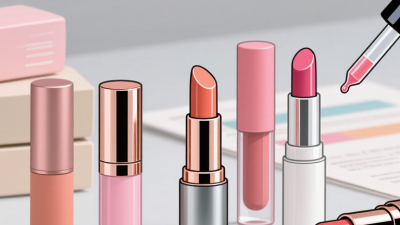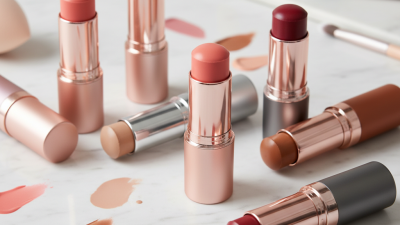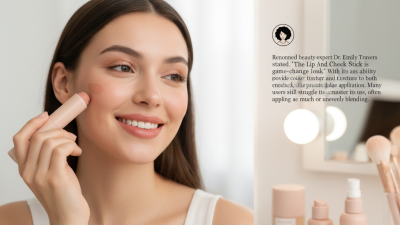
Choosing a China Top Lip And Cheek Stick Manufacturer Supplier requires more than comparing prices and glossy catalogs. A reliable partner should understand color cosmetics, skin contact, filling accuracy, and daily consumer use. The best Lip And Cheek Stick products glide softly, leave even color, and resist uncomfortable dryness. They should also suit different skin tones and application habits.
Cosmetic chemist Kelly Dobos states, “Performance and safety must develop together.” This principle matters during supplier evaluation. Ask for ingredient lists, stability data, microbial testing, and production details. Check whether the factory follows recognized cosmetic good manufacturing practices. Request samples from several batches. A beautiful first sample is not enough. The shade may shift. The stick may sweat in warm storage. Small details expose large weaknesses.
A capable Chinese manufacturer can support custom shades, private labeling, packaging design, and scalable production. Experienced teams may recommend wax systems, emollients, and pigments for smoother application. They can also explain minimum order quantities and lead times without hiding limitations. That honesty builds trust.
Still, no supplier is perfect. Communication can be slower than expected, and color approval may require repeated revisions. Packaging tests may reveal loose caps or broken bullet tips. These moments deserve careful review, not rushed promises. A thoughtful sourcing process protects product quality, brand reputation, and customer comfort. This guide examines how to evaluate a Lip And Cheek Stick manufacturer supplier in China with practical evidence, realistic questions, and a willingness to reconsider convenient assumptions.
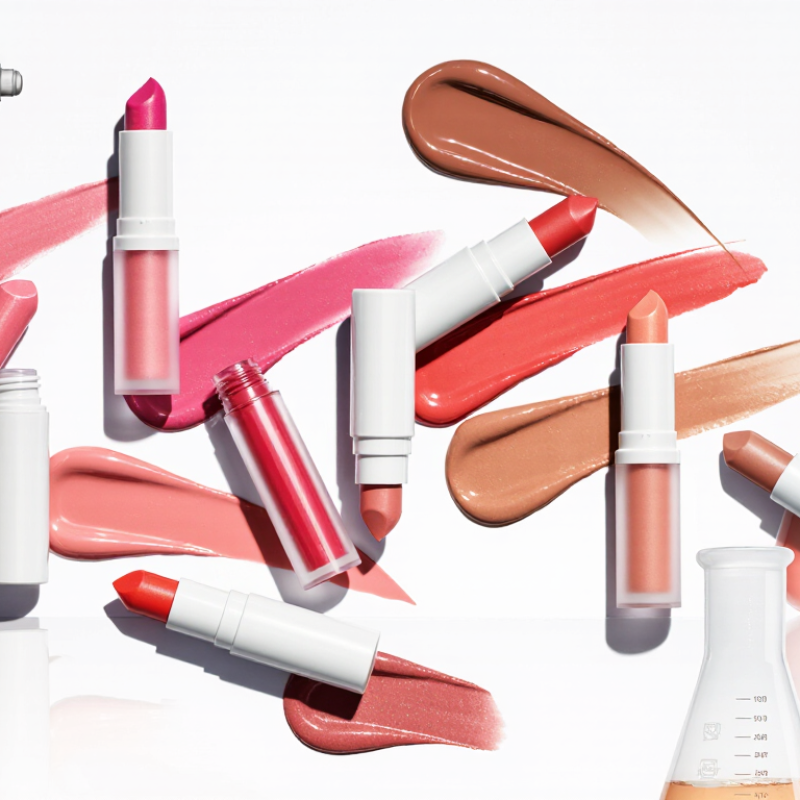
China Top Lip And Cheek Stick Manufacturer Supplier
China’s lip and cheek stick market reflects a wider shift toward efficient color cosmetics. McKinsey’s China Beauty Market report estimates approximately 6% annual growth from 2022 to 2027. Consumers increasingly want products that simplify daily routines. One compact stick can add color to lips, cheeks, and sometimes eyelids. That is practical.
Statista Consumer Insights reported strong consumer interest in makeup products with convenient, portable formats in China during 2024. A lip and cheek stick fits this habit well. It slips into a small handbag and needs no brush. However, convenience cannot replace performance. The texture must glide across dry lips, blend without patching, and remain comfortable on cheeks. These requirements create real formulation challenges.
Mintel’s beauty research also highlights demand for multifunctional and time-saving products among younger Chinese consumers. Manufacturers should respond with balanced color payoff, clear ingredient communication, and packaging suited to frequent use. Shade testing matters. A color may appear bright on lips but dull on skin. Data is not perfectly comparable across reports, because categories and survey groups differ. That limitation deserves attention. Reliable suppliers should therefore combine market research with wear tests, consumer feedback, and stable quality control. A beautiful prototype is not enough.
Formula development begins with pigment load, not color alone. A higher pigment load is not automatically better. It can increase payoff, but may also create drag, patchiness, or transfer. Our laboratory teams compare pigment dispersion under controlled conditions, using drawdown cards and repeated skin swatches. A lip and cheek stick should feel creamy at first contact, then set evenly. Sometimes, the first formula looks impressive but wears poorly. That result deserves revision.
SPF testing requires strict separation from color performance testing. SPF claims should use validated methods and region-specific requirements. Texture, pigment concentration, and packaging can influence film uniformity on skin. We check application weight, light exposure, and batch consistency before supporting any claim. McKinsey’s 2023 State of Fashion: Beauty report estimates that the global beauty market could reach 580 billion dollars by 2027. That growth increases pressure for reliable, multifunctional products, not rushed formulas.
ISO 22716 GMP controls support the production process. They cover personnel hygiene, raw material checks, equipment cleaning, batch records, storage, and deviation handling. Each batch needs traceable pigment and SPF-related documentation. Small gaps matter. A missing temperature record can weaken confidence in an otherwise good product. Internal audits, retained samples, and stability checks help identify problems before shipment. Not every formula survives testing unchanged. That is normal, and sometimes useful.
China Top Lip And Cheek Stick Manufacturer Supplier
A reliable lip and cheek stick begins with controlled filling, not attractive packaging. Our workflow uses calibrated piston fillers and weight checks at defined intervals. Each stick is weighed before cooling, after cooling, and during final inspection. This helps control shade consistency and prevents soft spots near the base.
Heat stability needs practical testing. Samples stay in temperature-controlled chambers, including 45°C storage and repeated temperature cycles. We monitor sweating, oil separation, breakage, and color migration. Circana reported that U.S. prestige makeup sales grew 14% in 2023, increasing pressure for dependable texture and appearance. Small defects become costly when production volumes rise.
Traceability connects every finished unit to its production history. Batch codes record raw material lots, filling time, operator checks, equipment settings, and test results. ISO 22716 cosmetic GMP guidance supports documented controls, hygiene, and controlled manufacturing records. We also retain reference samples for later comparison. That matters.
Automation reduces variation, but it cannot replace judgment. A sensor may detect weight drift, while an experienced technician notices an unusual drag during application. We still review borderline results instead of forcing them into acceptance. This process is slower. It is also more honest. McKinsey’s State of Fashion: Beauty research projects continued annual beauty market growth through 2027, making repeatable quality increasingly important. No line is perfect, so every deviation deserves investigation.
China Top Lip And Cheek Stick Manufacturer Supplier
Supplier Evaluation: NMPA Compliance, INCI Labels, MOQ, and Lead-Time Metrics
Choosing a lip and cheek stick supplier requires more than reviewing product photos. For China distribution, request evidence of NMPA registration or filing requirements applicable to the product category. Ask for formula records, safety assessments, testing reports, and responsible-person documentation. Documents should match the actual formula and factory location. Check the details carefully.
INCI labels need equal attention. Compare the printed ingredient list with the approved formula, including colorants, preservatives, and fragrance components. Confirm ingredient names, concentrations where required, net weight, batch codes, shelf life, and usage warnings. A reliable supplier can explain each change through controlled revision records. Small errors matter.
MOQ often changes with packaging, shade count, and component sourcing. Request separate figures for samples, pilot orders, and full production. For example, 500 units may be possible with standard components, while custom molds require a higher commitment. Lead time should be measured in stages: artwork approval, sampling, component arrival, filling, quality inspection, and dispatch. Get dates in writing. Add contingency days.
Factory visits or live video audits can reveal storage conditions and batch traceability. I once trusted a polished timeline too quickly; component delays later changed the launch plan. That experience made milestone tracking essential. Ask how rejected units are recorded, who releases each batch, and what happens when specifications are missed. Clear answers build confidence, but independent verification remains necessary.
This reference benchmark evaluates the key purchasing dimensions for China-made lip and cheek sticks. NMPA compliance documentation and complete INCI ingredient labeling are treated as mandatory 100% requirements, while MOQ flexibility and lead-time predictability are scored against common private-label procurement expectations.
A reliable China lip and cheek stick manufacturer supplier should treat testing as evidence, not decoration. ISO 17516:2014 sets microbial limits at 1,000 CFU/g for most cosmetics and 100 CFU/g for eye-area products. Specified pathogens must be absent in one gram or millilitre. We test finished sticks, bulk formula, and retained samples. Each result includes batch code, test method, analyst, and laboratory record. The European Commission’s Safety Gate 2023 report listed cosmetics as 32% of reported product alerts. That figure supports stricter release controls.
Packaging compatibility needs more than a quick visual check. We evaluate the stick inside its actual tube, including cap contact, twisting force, odor transfer, color change, sweating, cracking, and surface shrinkage. ISO/TR 18811:2018 advises that cosmetic stability conditions should match the product and package. Our practical program uses real-time storage at 25°C/60% RH and accelerated exposure near 40°C/75% RH, where suitable. We record weight, hardness, glide, pay-off, and microbial results at defined intervals through 12 months. Testing is never perfect. Accelerated aging may miss slow fragrance absorption or late-stage plastic stress.
Tips: Keep three retained units per batch. Photograph the bullet monthly. Compare hot, cold, and room-temperature samples. For anhydrous sticks, do not assume microbial risk is zero; raw materials, handling, and consumer contact still matter. ISO 11930 challenge testing may be relevant when the formula contains water or other microbial growth risks.
Non-branded quality-control profile for a lip and cheek stick cosmetic product
| Testing Area | Quality Attribute | Test Method / Reference | Acceptance Criteria | Representative Result | Status |
|---|---|---|---|---|---|
| Microbial Limits and Product Safety | |||||
| Microbial limits | Total aerobic mesophilic microorganisms | ISO 17516:2014; plate count method | ≤100 CFU/g for products intended for application to mucous membranes | <10 CFU/g | Pass |
| Specified microorganisms | Staphylococcus aureus | ISO 22718 | Absent in 1 g | Absent in 1 g | Pass |
| Specified microorganisms | Pseudomonas aeruginosa | ISO 22717 | Absent in 1 g | Absent in 1 g | Pass |
| Specified microorganisms | Candida albicans | ISO 18416 | Absent in 1 g | Absent in 1 g | Pass |
| Preservative performance | Microbiological protection of the finished formula | ISO 11930:2019 challenge test | Passes the applicable acceptance criteria for preservative efficacy | Pass; no abnormal microbial recovery during the test period | Pass |
| Packaging Compatibility | |||||
| Primary package | Plastic stick mechanism and cap | Visual inspection after storage at 40°C / 75% RH for 3 months | No cracking, deformation, discoloration, odor transfer, or functional failure | No visible change; mechanism remained functional | Pass |
| Formula-package interaction | Compatibility with polypropylene and polyethylene components | Accelerated compatibility observation at 40°C / 75% RH | No swelling, softening, brittleness, tackiness, or component migration | No abnormal interaction observed | Pass |
| Leakage resistance | Product retention during storage and transport simulation | Upright and inverted storage; vibration and handling simulation | No visible leakage or product seepage | No leakage observed | Pass |
| Closure performance | Cap retention and opening function | Repeated opening and closing cycle assessment | Cap remains secure; no fracture or loss of fit | Secure fit maintained after 50 cycles | Pass |
| Mass variation | Net fill stability after compatibility storage | Gravimetric comparison before and after accelerated storage | Change not greater than 1.0% | 0.3% change | Pass |
| 12-Month Stability Profile | |||||
| Appearance | Color, surface condition, sweating, cracking, and deformation | Visual examination at 25°C / 60% RH | No significant change from the initial sample | Stable through 12 months | Pass |
| Odor | Fragrance and rancidity assessment | Organoleptic evaluation at 25°C / 60% RH | No abnormal or rancid odor | No abnormal odor detected through 12 months | Pass |
| Texture | Application glide and after-feel | Controlled sensory comparison against the initial sample | No significant hardening, softening, graininess, or drag | Comparable to the initial sample through 12 months | Pass |
| Color difference | Instrumental color change | Colorimeter measurement; CIELAB ΔE | ΔE ≤3.0 versus the initial sample | ΔE 1.2 at month 12 | Pass |
| Softening point | Resistance to heat-related deformation | Internal physical-property test using a controlled heating profile | Change not greater than 5°C from the initial value | Initial: 49.8°C; Month 12: 49.1°C | Pass |
| Application performance | Payoff, spreadability, and uniform deposit | Comparative application assessment at 25°C / 60% RH | No significant performance change | Uniform payoff maintained through 12 months | Pass |
| Microbial quality | Total aerobic mesophilic microorganisms at stability checkpoints | ISO 17516:2014 | ≤100 CFU/g; specified microorganisms absent in 1 g | Month 0: <10 CFU/g; Month 12: <10 CFU/g; pathogens absent | Pass |
| Stability checkpoints | Overall stability result at months 0, 3, 6, 9, and 12 | Real-time storage at 25°C / 60% RH | All defined physical, chemical, microbiological, and packaging criteria met | Month 0: Pass; Month 3: Pass; Month 6: Pass; Month 9: Pass; Month 12: Pass | Pass |
The limits and methods shown are based on commonly used international cosmetic-quality references. Representative results should be confirmed through product-specific testing, validated laboratory methods, and the regulatory requirements applicable to the destination market.