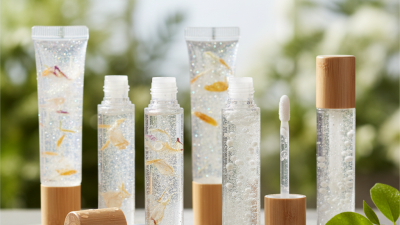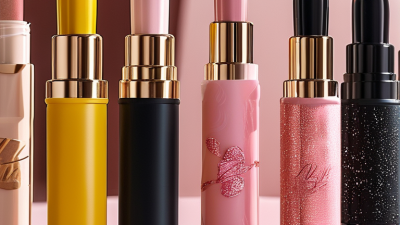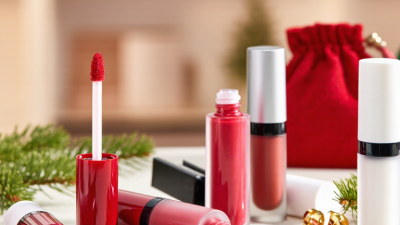
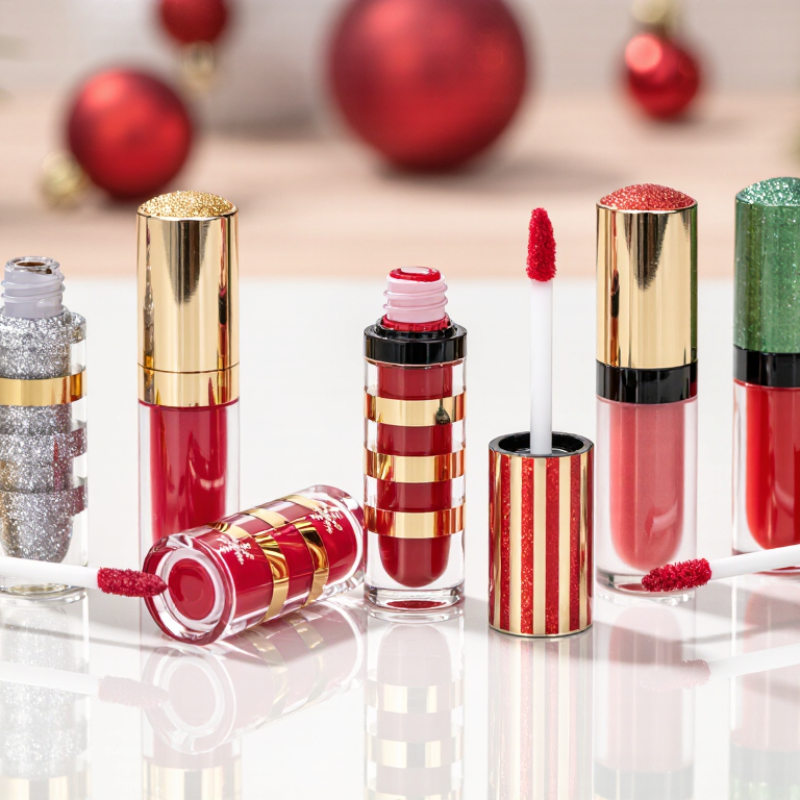
Choosing the right Christmas Lip Gloss Tubes involves more than festive colors and attractive photos. Global buyers must consider usability, packaging quality, supplier reliability, and regional requirements. A sparkling red tube may look appealing, yet a weak applicator or leaking closure can damage a product launch.
This guide reviews seven Christmas Lip Gloss Tubes for different purchasing needs. The selection considers tube materials, decoration methods, capacity, applicator design, sealing performance, and customization options. Details such as a smooth wand, secure cap, and readable labeling can strongly affect customer satisfaction. Small choices matter.
Practical sourcing experience shows that samples should be tested before large orders. Check the tube after repeated opening, gentle squeezing, and temperature changes. Inspect the cap thread and applicator connection closely. Ask suppliers for material information, production photos, and quality-control records. These steps cannot remove every risk.
Not every attractive tube is a dependable tube.
Global buyers should also confirm that packaging and cosmetic contact materials meet the applicable rules in their target markets. Requirements may differ between countries and product categories. Responsible suppliers should communicate clearly about documentation, manufacturing standards, minimum order quantities, and delivery schedules. Sustainability deserves careful attention too, because recycled or recyclable claims need evidence.
Some ratings in this guide may remain subjective. Appearance depends on brand identity, customer expectations, and budget. Therefore, buyers should compare samples rather than trust images alone. The best Christmas Lip Gloss Tubes balance festive presentation with safe, practical, and consistent performance.
The global beauty industry offers a powerful benchmark for Christmas lip gloss tube buyers. McKinsey’s beauty market analysis places the sector near the $450 billion scale, showing why seasonal packaging deserves careful investment. Its research also points to continued premiumization and strong online beauty sales. Lip gloss tubes are small, but they carry major shelf and shipping decisions.
For Christmas collections, seven practical formats stand out: squeeze tubes, doe-foot tubes, slim pocket tubes, mini gift-set tubes, clear tubes, frosted tubes, and refill-ready tubes. Squeeze tubes suit thicker gloss formulas and reduce leftover product. Doe-foot designs improve application control. Mini tubes support trial packs and advent calendars. Clear bodies display color accurately, while frosted finishes create a softer winter appearance. Refill-ready formats may reduce packaging waste, although their real benefit depends on collection systems.
Euromonitor’s beauty and personal care research continues to identify e-commerce as a major channel, so tube durability matters beyond appearance. Buyers should request leak testing, cap-torque records, material declarations, and transport samples before approving large orders. The Sustainable Packaging Coalition also stresses evaluating the full packaging system, not only one component. That means checking tube, cap, applicator, ink, and disposal guidance together. A shiny tube is not automatically sustainable. This is where many seasonal projects become weaker. Christmas demand also compresses production schedules, and rushed approvals can create inconsistent color or loose closures. The $450 billion benchmark is useful, but it should not replace product-level testing.
7 Best Christmas Lip Gloss Tubes for Global Buyers?
For Christmas launches, tube choice affects freight, sampling, and customer complaints. My factory-side ranking uses capacity, applicator, MOQ, and leakage risk. Mini squeeze tubes hold 1–3 ml, use a narrow nozzle, need low MOQ, and show low leakage risk. Slim wand tubes hold 3–5 ml, usually use doe-foot applicators, and offer medium MOQ with moderate risk. Standard round PP tubes hold 5–8 ml, support flocked or doe-foot tips, and usually provide the best cost balance. Leakage remains possible around the wiper.
Square-shoulder tubes hold 6–10 ml and improve shelf visibility, but corners can increase sealing pressure. Soft-touch tubes offer a premium grip, yet their coating needs rub testing. Dual-ended tubes combine gloss and liner, normally at higher MOQs and higher assembly risk. Airless squeeze formats reduce backflow, but their 5–8 ml pumps raise tooling costs and require careful priming tests. These rankings reflect common supplier quotations, not a universal rule.
The OECD Global Plastics Outlook reports that only 9% of plastic waste was recycled globally in 2019. That supports smaller capacities and mono-material construction where practical. Smithers’ packaging forecasts also identify lightweighting as a continuing commercial priority. Still, I would not select the lightest tube automatically. Christmas handling includes cold storage, parcel drops, and repeated opening. ASTM D4169 distribution testing can expose failures before shipment. My own caution is simple: a lower MOQ may hide higher leakage risk. Request filled samples, cap-torque records, and 48-hour upside-down testing before approval.
Christmas lip gloss packaging often looks festive, but material choices decide its practical value. For global buyers, PCR plastic, glass, and recyclability evidence deserve close inspection. PCR plastic can reduce virgin resin use and give discarded packaging a second life. However, recycled content may create slight color variation, tiny specks, or a faint odor. Clear gloss tubes may lose their premium appearance. That detail needs honest discussion with suppliers.
Glass offers strong chemical resistance and a substantial hand feel. It also supports repeated material recycling when collection systems accept it. However, glass is heavier, more fragile, and often causes higher transport emissions. A dropped tube can break on a retail counter.
PCR plastic is lighter and safer for shipping, although its recycling quality can vary between regions. Neither option is automatically greener.
ISO 18604 provides guidance for packaging designed for material recycling. It does not certify a finished lip gloss tube by itself. Buyers should review the complete package, including the tube, cap, applicator, label, ink, and adhesive.
A recyclable tube may fail in practice if its components are difficult to separate. Ask for material declarations, recycled-content evidence, and relevant test records. Check local collection conditions too. I have seen attractive packaging claims weaken under this review. That is uncomfortable, but useful. A simple mono-material design may outperform a more decorative package during real recycling.
7 Best Christmas Lip Gloss Tubes for Global Buyers?
Global Compliance Checklist: EU 1223/2009, U.S. MoCRA, and INCI Labels
Christmas lip gloss tubes should look festive, but compliance comes first. The seven strongest options usually share practical features: accurate filling, secure caps, smooth applicators, compatible materials, tamper evidence, durable decoration, and traceable lot codes. Test each tube with the actual gloss formula. Some plastics soften, stain, or develop odors after storage. That detail is easy to miss.
For EU sales, check the requirements under Regulation (EC) No 1223/2009. A responsible person, Product Information File, Cosmetic Product Safety Report, and CPNP notification may be required. The label should show ingredients using accepted INCI names. It may also need nominal content, batch identification, precautions, durability information, and responsible-person details. Keep artwork readable after rubbing, cold storage, and handling.
For U.S. distribution, review MoCRA obligations, including facility registration, product listing, safety substantiation, and serious adverse event reporting. Confirm whether the label provides the required contact information for consumer reports. Do not treat an attractive holiday sleeve as a compliance shortcut. I have seen packaging teams approve glitter finishes before checking barcode contrast and lot-code space. That is a costly oversight. A checklist helps, but it is not perfect. Recheck every market, formula, and tube component before production.
Use this seven-point checklist when evaluating Christmas lip gloss tube packaging for the EU and U.S. markets. A value of 1 means the checkpoint is relevant to that compliance framework; 0 means it is not the corresponding checkpoint. U.S. exemptions may apply depending on the business and product profile.
Key takeaway: EU products generally require a Responsible Person, Product Information File, safety assessment, and CPNP notification. U.S. MoCRA introduces facility registration, product listing, safety substantiation, and serious adverse event reporting. Ingredient declarations should use appropriate INCI names and follow the destination market’s labeling rules.
The best Christmas lip gloss tubes should pass a practical buyer scorecard, not only look festive. A 2023 McKinsey and BoF report projected the global beauty market could reach about $580 billion by 2027. Seasonal packaging must therefore balance visual appeal with reliable scaling. Start with landed cost. Compare tube, applicator, decoration, carton, tooling, and inspection fees separately. A low unit price can hide expensive molds or high minimum order quantities.
Shipping weight matters. A five-gram difference per tube becomes 50 kilograms across 10,000 units. That can affect freight tiers, pallet density, and warehouse handling. Ask suppliers for gross weight, carton dimensions, units per carton, and tested drop resistance. Dimensional weight may matter more than product weight. Check both. My practical preference is a lightweight PET or PP tube with a secure wiper, although a thinner wall can feel less premium and may deform in transit.
Decoration creates Christmas appeal. Foil stamping, metallic coating, seasonal color matching, and short-run digital printing offer different cost and flexibility levels. Custom molds provide stronger differentiation, but they usually increase tooling time and inventory risk. Research from Grand View Research has identified cosmetics packaging as a steadily expanding market, supported by premium presentation and customization demand. Still, “custom” is not automatically better. A simple red sleeve and removable charm may outperform a complex tube when the launch window is short. Request decoration samples under bright and warm lighting. Colors often look different than expected.
Comparative benchmark for empty cosmetic packaging suitable for seasonal lip gloss launches. Scores are based on cost efficiency, decoration flexibility, transport weight, customization potential, and Christmas gift appeal.
| Rank | Tube Format | Typical Fill Size | Indicative Cost per 1,000 Units (USD) |
Typical Shipping Weight per 1,000 Units |
Decoration Options | Customization Potential | Typical MOQ | Christmas Gift Appeal | Weighted Buyer Score (5.0 Maximum) |
|---|---|---|---|---|---|---|---|---|---|
| 1 | Squeeze Tube with Angled Applicator | 5–10 ml | US$80–220 | 8–18 kg | Flexographic printing, offset printing, hot stamping, matte or gloss finish, seasonal cap colors | High: tube color, cap, nozzle, print artwork, surface finish, and fill volume can usually be specified | 3,000–10,000 units | ★★★★☆ Lightweight and easy to decorate with festive graphics |
4.40 / 5.0 |
| 2 | Soft-Touch PE Tube with Precision Tip | 5–8 ml | US$100–260 | 9–20 kg | Full-body printing, soft-touch coating, metallic ink, spot varnish, colored caps | Very high: suitable for custom color matching, tactile finishes, tip shapes, and coordinated gift sets | 5,000–10,000 units | ★★★★★ Premium hand feel and strong shelf presentation |
4.35 / 5.0 |
| 3 | Clear PET Bottle with Doe-Foot Wand | 4–8 ml | US$180–420 | 18–30 kg | Screen printing, labels, hot stamping, frosted coating, metallic collars, decorative caps | Very high: bottle clarity, cap color, collar finish, applicator shape, and decoration can be combined | 5,000–20,000 units | ★★★★★ Allows glitter, shimmer, and holiday shades to remain visible |
4.30 / 5.0 |
| 4 | Mini Wand Tube for Gift Sets | 2–4 ml | US$120–300 | 10–20 kg | Direct printing, paper labels, colored caps, metallic accents, small-batch seasonal artwork | High: practical for multi-shade sets, sampler collections, countdown boxes, and promotional kits | 3,000–10,000 units | ★★★★★ Compact format works well for stocking fillers and advent calendars |
4.25 / 5.0 |
| 5 | Dual-Ended Gloss Tube | 2 × 3–5 ml | US$280–650 | 22–38 kg | Full-color printing, two-color caps, metallic decoration, contrasting seasonal artwork | Very high: supports paired shades, gloss-plus-liner concepts, dual finishes, and coordinated packaging | 10,000–20,000 units | ★★★★★ High perceived value for gift bundles and limited editions |
4.10 / 5.0 |
| 6 | PCR-Content Plastic Gloss Tube | 5–10 ml | US$140–320 | 10–22 kg | Printing, labels, matte coating, transparent windows, recycled-content messaging | High: PCR percentage, color, finish, cap, artwork, and secondary packaging can often be customized | 5,000–20,000 units | ★★★★☆ Suitable for buyers combining holiday design with sustainability positioning |
3.80 / 5.0 |
| 7 | Aluminum Squeeze Tube with Screw Cap | 5–10 ml | US$220–520 | 16–28 kg | Offset printing, embossing, debossing, metallic finishes, colored caps, protective varnish | High: distinctive metal appearance supports premium decoration and limited-edition artwork | 5,000–15,000 units | ★★★★☆ Premium appearance, although metal packaging may increase landed cost |
3.65 / 5.0 |
Benchmark notes: Cost ranges refer to empty primary packaging only and exclude gloss formula, filling, cartons, freight, duties, tooling, testing, and taxes. Shipping weights are estimated packed weights for 1,000 units and vary with bottle geometry, applicator, carton configuration, and destination requirements. Actual pricing, minimum order quantity, decoration method, and recycled-content availability should be confirmed with the selected packaging supplier before purchase.